
Backpack Survivors : Idle RPG
Purplecow gamesRole Playing
3.953.00 Reviews
- Version
- 1.1.08
- Installs
- 1.00M
- Age Rating
- Everyone
Screenshots
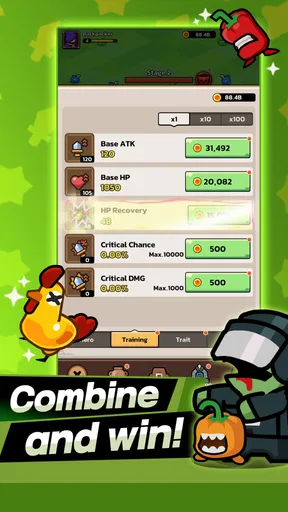
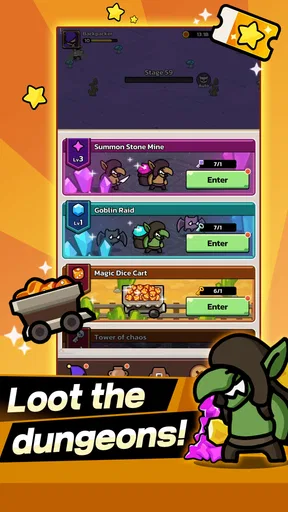
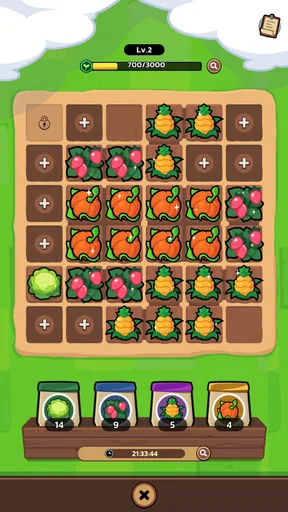
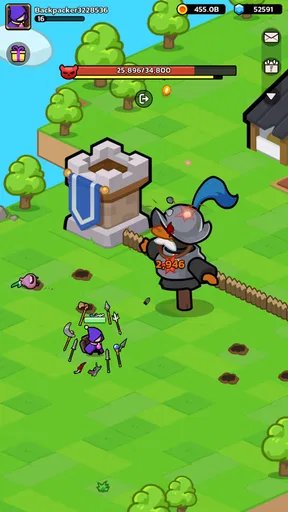
Our Review of Backpack Survivors : Idle RPG
 Analysis by Appyee
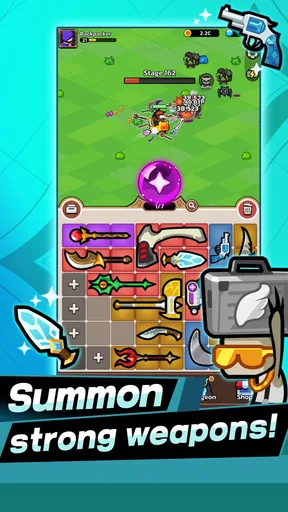
I approached Backpack Survivors: Idle RPG expecting a light role-playing game built around short sessions, and that is exactly where it makes the most sense. Its central idea is simple: you manage a survivor, arrange weapons in a backpack, and let that preparation carry you through waves of monsters. The appeal is less about constant movement and more about making good choices before the next fight becomes difficult.
That makes it an easy game to pick up when I have only a few minutes. I can check my equipment, adjust the backpack, start a run, and watch the build develop without needing the concentration demanded by a traditional action RPG. At the same time, the backpack system gives it more thought than a completely hands-off idle game. The important question is not merely whether I found a stronger item, but whether it fits the space, timing and overall plan of my loadout.
How the backpack routine shapes each run
The first useful habit is to treat the backpack as a small puzzle rather than a storage box. Every new weapon creates a decision: equip it immediately, keep it for later, or use the available space for something that supports the current setup better. I found that quickly filling every slot is not always the smartest move. A crowded backpack can leave less room to adapt when a genuinely useful item appears.
My usual workflow is straightforward. I begin by checking what the current build is trying to do, then I look at the available weapons and place the most important pieces before filling the remaining gaps. After that, I let the run progress and watch for signs that the arrangement is falling behind. If enemies begin surviving longer than expected, I do not automatically replace the first weapon I see. I first ask whether the problem is weak equipment, poor space management, or a build that has become too scattered.
This distinction matters because the game rewards preparation more than frantic input. I can enjoy it while commuting, during a short break, or at the end of the day when I want something interactive but not demanding. A realistic session for me is checking progress after finishing another task, making one or two backpack changes, and leaving the game to handle the next stretch. That rhythm is more satisfying than repeatedly tapping through menus with no meaningful choice.
The role-playing layer gives those decisions a longer purpose. Progress is not only about surviving one encounter; it is about gradually creating a setup that feels more reliable. I enjoy that sense of improvement, although players looking for a deep story, dialogue choices or a large world to explore may find the format too narrow. This is a combat-and-build game first, not a narrative adventure presented in role-playing clothing.
The game is free, which makes experimenting less intimidating. I can try a different arrangement without feeling that every mistake has wasted a purchase. Still, free access does not automatically make every minute equally rewarding. Idle games can become repetitive when the next improvement feels like a small numerical step rather than a new tactical possibility. I recommend playing with a specific goal in mind, such as improving the backpack layout or testing whether a different weapon mix survives longer, instead of simply collecting progress in the background.
Where the idle format works best
The idle structure is particularly useful for people who like incremental progress but do not want a game that demands uninterrupted attention. It gives me permission to step away, return, make a decision and continue. That is a better fit for short, irregular play than a conventional role-playing game with long quests or real-time battles that punish interruptions.
There is also a nice separation between planning and watching. During the active part of a run, I can observe whether my choices are working. Between runs, I can make a more deliberate adjustment. I suggest resisting the temptation to change everything after one disappointing result. A repeatable habit of changing one major part of the setup at a time makes it easier to understand what actually helped.
That habit is one of the first non-obvious strengths here. Because the backpack is the heart of the game, controlled experimentation is more useful than random upgrades. If I replace several weapons simultaneously, a better result tells me very little. If I change one slot or one type of equipment and compare the next attempt, I gain a clearer sense of what the build needs.
Settings and small checks before playing
I always begin by checking the available in-game options before settling into a longer session. I pay attention to sound, notifications and any display controls the game presents, because an idle RPG is often played alongside other activities. A quieter setup is more comfortable in a shared room, while keeping enough feedback enabled helps me notice when a run has ended or needs attention. I would not assume every device handles these choices in the same way, so I prefer testing them during a short session rather than changing everything at once.
Device compatibility is broad enough for many older phones: the game supports Android 7.0 or later. That is helpful if I want to use a secondary device rather than my newest phone. Even so, age alone does not guarantee identical comfort. Screen size, battery condition and how smoothly menus respond can affect an idle game more than expected, especially when the main activity is repeatedly inspecting small backpack spaces and item details.
I also recommend deciding how you want the game to fit into your routine. If you plan to check it several times a day, keep the process simple: open it, review the current run, make only necessary changes, and leave. If you prefer longer sessions, use that time for deliberate testing rather than repeatedly restarting without a plan. The game becomes less tiring when each visit has a purpose.
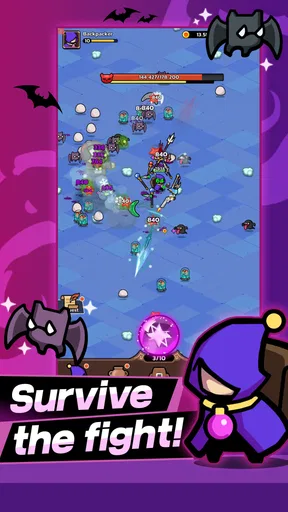
Another useful check is whether the visual presentation remains comfortable during extended idle progress. I do not need constant animation to enjoy this type of game, but I do need the information to remain readable. If the screen feels busy, I focus on the backpack and the most important upgrade choices instead of trying to monitor every moment of combat. That keeps the experience closer to a strategy routine than a visual endurance test.
There is no reason to treat the game as a background obligation. If checking it starts to feel like another task on a to-do list, I take a break. Idle systems are most enjoyable when they support a relaxed habit, not when they create pressure to return at every opportunity. This is especially relevant for younger players, even though the content rating is Everyone; the accessible presentation does not mean every player will enjoy the same amount of repetition.
Faster patterns for building a reliable setup
Experienced play begins with prioritization. I first identify the items that define the build, then reserve space for them before placing secondary equipment. This prevents a common mistake: filling the backpack with individually attractive weapons and discovering that the collection has no clear direction. A slightly weaker item can be more useful if it completes a coherent arrangement instead of competing for the same limited space.
I also separate “survive now” choices from “improve later” choices. When a run is close to failing, I favor the change that immediately stabilizes it. When the current setup is comfortable, I use the opportunity to test a more ambitious arrangement. Mixing those goals often leads to frustration because a risky experiment is judged as though it were supposed to be a dependable solution.
A second practical habit is to keep a mental record of failed layouts. I do not need a spreadsheet for this game. Remembering that a particular combination left too little room, or that a promising weapon did not solve the real weakness, is enough to avoid repeating the same experiment. This turns unsuccessful runs into useful information rather than wasted time.
The third habit is to avoid overreacting to a single reward. A new weapon may look exciting, but its value depends on what it displaces. I compare it with the item currently occupying the relevant space and consider whether the change improves the whole backpack. This is where the game differs from a simple power ladder. Bigger-looking equipment is not automatically better if it breaks the balance of the setup.
For short sessions, I use a “one adjustment, one observation” cycle. I make one meaningful change, let the game run long enough to show its effect, and then decide whether to keep it. This is faster in the long term than rebuilding constantly. It also makes the game more approachable for someone who does not enjoy complex theorycrafting but still wants decisions to matter.
Compared with a standard action RPG, the faster pattern here is not learning attack combinations or memorizing enemy movements. It is learning when not to interfere. Compared with a purely passive idle game, there is more value in organizing the equipment intelligently. That middle ground is the game’s clearest identity, and it is also why players who want direct control may find it restrained.
What the system can and cannot deliver
The backpack concept is clever, but its limits become visible with time. Once I understand the basic arrangement principles, some sessions can start to feel like maintenance: inspect progress, replace an item, wait, and repeat. The game has enough structure to make preparation interesting, yet it does not replace the variety of a full role-playing adventure with exploration, quests and several distinct forms of interaction.
That limitation is not a flaw for everyone. I would choose this over a larger RPG when I want a compact routine that fits around real life. I would choose the larger RPG when I want a story to pull me forward or combat that rewards precise moment-to-moment actions. The right choice depends on whether the player values convenience and incremental planning more than variety and control.
The game can also be less satisfying for players who dislike waiting. The idle format means that progress is partly tied to letting systems run rather than actively solving every encounter. I enjoy that when I am busy, but I understand why someone might see it as slow. If your ideal role-playing game gives you constant decisions, exploration and immediate feedback, this one may feel too passive after the novelty of the backpack wears off.
Another trade-off is that limited space creates meaningful choices but also occasional friction. I like having to decide what deserves a place, yet inventory constraints can become annoying when several potentially useful items compete for the same room. My solution is to keep the build focused and avoid collecting every option emotionally. Once I accept that some items are not meant for the current setup, the management becomes cleaner.
The game’s audience size suggests that the concept has reached plenty of players: it has passed one million installs. Its average rating is 3.9 from around 1.8 thousand ratings, with 53 written reviews. I read that combination as a sign of a generally appealing idea with some unevenness in execution or long-term satisfaction. I would not treat the rating as a guarantee, but it matches my experience: the opening loop is easy to understand, while the later value depends heavily on how much I enjoy repeated optimization.
Purplecow games has kept the package focused on that central loop. The current version is 1.1.08, and I would make sure my device is running a compatible system before installing. The practical expectation should be modest: this is a compact free role-playing game for equipment planning and idle progression, not a replacement for a large premium RPG.
Who should install it and who should skip it
I recommend it to players who like sorting, optimizing and seeing a plan gradually become more effective. It is a good match for someone who wants a game that can be checked between other activities, especially if backpack organization sounds more appealing than rapid controls. It also works for newcomers to idle RPGs because the basic objective is easy to grasp without requiring a long tutorial explanation.
I would be more cautious recommending it to players who need a strong story, direct character movement or a wide range of activities. It is also not my first choice for someone who becomes bored when progress settles into a repeated upgrade cycle. In that case, a conventional role-playing game with exploration or a more active survivor game would probably offer better long-term variety.
For families, the Everyone rating makes the age classification approachable, but I would still judge the game by the individual player’s tolerance for repetition and waiting. A child who enjoys arranging items may find the backpack satisfying; another may quickly want more direct action. The rating describes accessibility, not a promise that the pacing suits every age.
My verdict after settling into the routine
The best way to enjoy Backpack Survivors: Idle RPG is to play it as a small planning game, not as a full-scale adventure. Its strongest feature is the connection between limited backpack space and survival progress. I get the most from it when I make measured changes, give them time to show results, and keep each run tied to a clear experiment.
The free price lowers the barrier to trying it, and the Android 7.0 minimum makes it practical on a wide range of devices. The role-playing category is represented here through progression and build decisions rather than story depth. That distinction is important: the game is satisfying when I want a compact system to refine, but it cannot provide the emotional or mechanical range of a larger RPG.
After using a repeatable routine, checking settings for comfortable background play, and resisting random backpack reshuffles, I found a game that is easy to return to without demanding my whole evening. Its weaknesses are equally clear: repetition, limited direct control and the possibility that equipment management starts to feel like upkeep. I would recommend giving it a try if those trade-offs sound acceptable. For me, it works best as a calm, bite-sized survivor RPG that rewards attention to arrangement more than speed.
Verdict
Strengths of Backpack Survivors : Idle RPG
- Simple idle progression works well for short play sessions.
- Offline rewards let you advance without staying constantly connected.
- Random upgrades make each run feel different and encourage replayability.
- Lightweight gameplay is suitable for older or less powerful phones.
- Frequent unlocks provide a steady sense of progress early on.
Limitations of Backpack Survivors : Idle RPG
- Later stages can feel repetitive once familiar builds become dominant.
- Progress may slow considerably without watching ads or spending resources.
- Random upgrade choices can occasionally make runs feel unfair.
- The interface can become crowded during intense battles.
- Limited strategic control may disappoint players seeking a deeper RPG experience.
Similar Picks in This Category
View All
Hair Dye
CrazyLabs LTD4.4

Monster High™ Beauty Salon
CrazyLabs LTD4.5

Bus Simulator - Bus Games 3D
Jima Apps4.4

Flight Pilot: 3D Simulator
Wildlife Studios4.1


Super Stylist Fashion Makeover
CrazyLabs LTD4.4
Frequently Asked Questions
What is Backpack Survivors: Idle RPG?
Backpack Survivors: Idle RPG is a mobile role-playing game that combines automatic combat, character progression, and inventory management. You build a team or hero setup, collect equipment, and arrange items in a limited backpack space to improve your fighting potential. Battles are designed to continue with relatively little manual input, making the game suitable for short sessions as well as longer periods of passive progression.
How does the backpack and equipment system work?
The backpack is more than a storage area because item placement and equipment choices can directly affect your build. You need to organize weapons, armor, accessories, and other resources while deciding which upgrades are worth keeping. Since space is limited, managing your inventory becomes an important part of the strategy. Experimenting with different combinations can help you create stronger setups for increasingly difficult enemies.
Can I play Backpack Survivors: Idle RPG offline?
Offline availability can depend on the specific feature or version of the game. Core idle progression may continue in some situations, but an internet connection can still be required for advertisements, cloud saving, account synchronization, events, updates, purchases, or online rewards. Before relying on the game during travel or without mobile data, it is best to test which functions remain accessible after temporarily disconnecting your device.
Is Backpack Survivors: Idle RPG free to download and play?
The game can generally be downloaded without an upfront purchase, but free access may include optional in-app purchases and advertising. These extras can provide resources, speed up progress, unlock convenience features, or offer additional rewards. You can usually play without spending money, although progression may feel slower and some promotions may appear frequently. Review the store listing and your device’s purchase settings before starting.
Is Backpack Survivors: Idle RPG suitable for casual players?
Yes, the idle RPG structure makes it approachable for players who prefer short and flexible gaming sessions. You can check your progress, collect rewards, improve equipment, and return later without needing to control every battle manually. However, casual players should still expect recurring upgrade decisions, inventory organization, and increasingly challenging stages. The experience is most enjoyable if you like gradual progression and optimizing builds over time.
Play our best games!


